
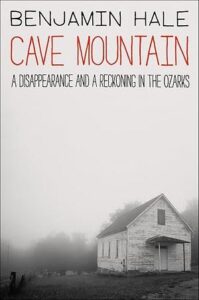

Cave Mountain: A Disappearance and a Reckoning in the Ozarks
Benjamin Hale
“What began with their frantic shouting eventually became the largest search-and-rescue mission in Arkansas history.”
In 2001, Haley Zega disappeared while hiking with her grandparents in the Ozark Mountains. Her encounter with a ghostly apparition dredges up dark memories of another young child, this one part of a doomsday cult led by a psychopath and her brainwashed “prophet.”
I don’t often call books “bad” because often what I’m reading just isn’t right for me, but…this book is not good, y’all. We dive into Haley’s disappearance, but then the author takes the first of many detours to describe various pieces of his family’s history in Arkansas (he and Haley are cousins). Then we travel back in time to hear about the cult and murder that’s supposed to be the main thrust of the story — but wait, there’s also a second cult to talk about. Then there’s weird tangents from the author about his views on Christianity, and like half a chapter about a Rembrandt painting, and turns out even Haley was like, “I didn’t see a ghost, I was starving and hallucinating.” This book tried to be a memoir, a true crime investigation, and a treatise on the author’s religious beliefs — as a result, it’s an absolute mess. Honestly, I’m not sure why it was sent to print. Benjamin Hale’s other writings rate much higher on Storygraph, which I think is a sign he needs to stick to fiction.
Just…yikes.
DNF
1929: Inside the Greatest Crash in Wall Street History — and How it Shattered a Nation
Andrew Ross Sorkin
“We all love an easy buck. Temptation has driven human folly for centuries, whether the serpent in the Garden of Eden or the market manias of cryptocurrency or artificial intelligence. Each wave seduces us into thinking that we’ve learned from history and, this time, we can’t be fooled. Then it happens again. This is how it happened in 1929.”
The idea of trying to summarize this book feels as tedious as trying to read it was. It’s the tale as old as time of men being greedy and thinking they’ve found a cheat with no downside, only to be proved incredibly wrong. I can tell it’s well-researched, mainly because Sorkin seems to have included everything he dug up — and it’s just too much uninteresting stuff (to me, anyway). It was a series of complicated financial facts that never went past Wall Street and how the men who contributed to the crash tried to weasel their way out of being impacted. And since Sorkin’s theory is that we’ll just end up doing this all again, I’m not really sure what value I get from reading about it.

From Below
Darcy Coates
“Beneath that was another darker fear. That maybe she didn’t want to see clearly. That maybe there was something about the hallway that was hiding just outside of their lights, and she was better off not knowing it was there.”
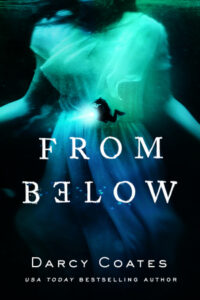
After missing for more than 60 years the SS Arcadia has been discovered, and marine explorer Cove Waimarie has been given exclusive access to the wreckage. When their first dive reveals something none of them expected, it becomes clear there’s more to the ship than just its mysterious disappearance. The Arcadia is awakening — and it’s hungry.
This book’s creepy factor was off the charts, making it a perfect spooky season read. The sunken ship setting is great: crushing pressure, cold temperatures, billowing silt, dark holds, and grandeur in peeling ruin. The claustrophobia was intense, and the visual descriptions kept me up at night (as well as totally against ever scuba diving). The characters are a little flat and the plot is wobbly — no experienced diver/explorer would build the team described, much less let them near a cold-water dive. But this was just so much fun that I don’t mind.
Read this if your goal is to get seriously creeped out. Just remember to not hold your breath.
A Vindication of the Rights of Woman
Mary Wollstonecraft
“And will moralists pretend to assert, that this is the condition in which one half of the human race should be encouraged to remain with listless inactivity and stupid acquiescence? Kind instructors! what were we created for? To remain, it may be said, innocent; they mean in a state of childhood. We might as well never have been born, unless it were necessary that we should be created to enable man to acquire the noble privilege of reason, the power of discerning good from evil, whilst we lie down in the dust from whence we were taken, never to rise again.”
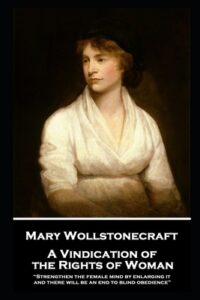
Published in 1792, Wollstonecraft’s essay is one of the most well-known proto-feminist works. Her fierce advocacy for equitable treatment of women inspired and galvanized many, mostly notably the attendees of the Seneca Falls Convention. Her reputation was diminished by her husband’s biography and her life story overshadowed by the daughter she died giving birth to; however, this essay impacts the lives of women to this day.
This is a book you should read slowly, and not just because language was very different 235 years ago. You should savor it because it represents the beginning of a shift in how women saw and valued themselves — also, the author has an unexpected snarky streak that I’m obsessed with. Wollstonecraft didn’t believe in absolute equality between men and women, but she did believe they were equal in God’s eyes — and therefore accountable to the same moral laws (virtues). She saw the paltry education women received and how they were raised to be supercilious trophy wives, with no knowledge of how to be real companions to their husbands or true nurturers and educators of their children. She wanted those in power (read: men) to understand that advocating for women meant a better society for all.
The version I picked up didn’t have any modern commentary or footnotes. Fortunately my copy of How to Think Like a Woman filled some gaps…and I may have snuck a peek at the Wikipedia page. Here’s some context those gave me so I could enjoy the experience more:
- She harps a lot on “sensibility,” which at the time meant an excessive empathy or sense of feeling that resulted in crying, fainting, and other dramatic behavior. Sensibility had formerly been considered good; however, many people in Wollstonecraft’s era were beginning to think it contributed to scandalous things like individual rights, sexual freedom, and unconventional family relationships (egad!). Women in particular were accused of using sensibility to manipulate men.
- Despite grumping about it so much, Wollstonecraft uses a fair amount of sensibility in her essay: she talks about feelings often, and injects personal asides. All this balanced with the traditional (male) philosophical language she used to form her arguments. In the end she believed rationality and sensibility should exist and be used virtuously by everyone.
- The essay is addressed mainly to men because the author believed women didn’t currently have enough power to make these changes themselves. Rather, she wanted me to see that empowering women was important for its own sake because it would lead to a better world overall…which is obviously something virtuous men would want. This mirrors the language shift I’ve seen in DEI/feminist circles in the last few years; these groups are inviting men back into the conversation because they believe it will take everyone, not just women, working together for change.
- In her youth, Wollstonecraft said she would never marry — she believed she was made for more than wifehood/motherhood. Yet throughout her life she had several tempestuous relationships with men, and had to rely on them for her own legitimacy. She was a product of the very system she disliked, forced to be a governess or marry so she wouldn’t be ostracized, and I think she found that really frustrating.
While this essay clearly galvanized women, I don’t know how much it mattered to men. Virtuous individuals may have been persuaded by the argument, but based on how history has gone I don’t think most men were. It seems like the average man of the time (and even now) didn’t consider the argument valid — why spend time improving women’s lives when they could just focus on improving their own, and get a hot, tractable wife in the bargain?
Frustrating in many ways, but well worth a read.
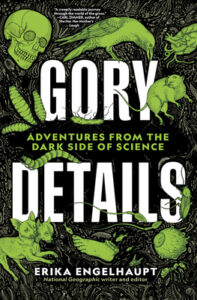

Gory Details: Adventures from the Dark Side of Science
Erika Engelhaupt
“This kind of scientific boldness is something the world could use more of. All too often, we’re hemmed in by our fears and our sense of propriety. Some subjects simply aren’t discussed, or aren’t taken seriously as topics of investigation. Sometimes that’s because we collectively feel they’re gross or embarrassing—like secretions. Or sex. Or dead bodies.”
We may say we’re not interested in the macabre or the taboo, but traffic to the Gory Details blog makes it clear that’s not the case. The truth is that humans have always been curious about weird stuff; often that curiosity leads to the kinds of scientific discoveries Engelhaupt discusses. Whether you’re into creepy-crawlies, the bizarre stuff that can happen to your brain, or are just morbidly curious, this book has something for you.
As a loud and proud macabre intellectual, this book speaks to me on a cellular level. Head transplants, menstrual blood research, worms found in human eyeballs? Sign me up! Each essay was interesting, and I liked how the chapters were structured thematically. The one downside is that this book is not for expert morbid readers. The majority of the topics were familiar — it wasn’t until I got to the parts on brain worms and misophonia that I learned some totally new things. That said, I appreciate the author’s dedication to exploring and sharing about gross science, as well as her stance that such research helps humanity. Here’s to the weirdos.
A great read if you’re new to morbid (and are maybe looking for a new, very strange, hobby).
Photo by Gerardo Covarrubias on Unsplash